


Rust - A nasty word!

Rust - A nasty word!
Oxidization is a part of life, we try and minimise it as much as possible, but despite efforts, it constantly rears it's ugly head.
Or is it that bad? This post is a little lengthy, but I will explain as best I can why it's not that bad, it's easily treated, and hopefully I can put your mind at ease.
Firstly, the little bit of surface rust, this is the type that sits on top of a coating, and is foreign metal (not the base metal) that has contacted water and turned the typical brown colour. This just easily cleans off and the coating will be fine underneath. I get this a lot on my car, industrial fallout from my workshop, all the small particles of metal fly out and land over the paintwork, ends up feeling like sandpaper... (how to remove below)
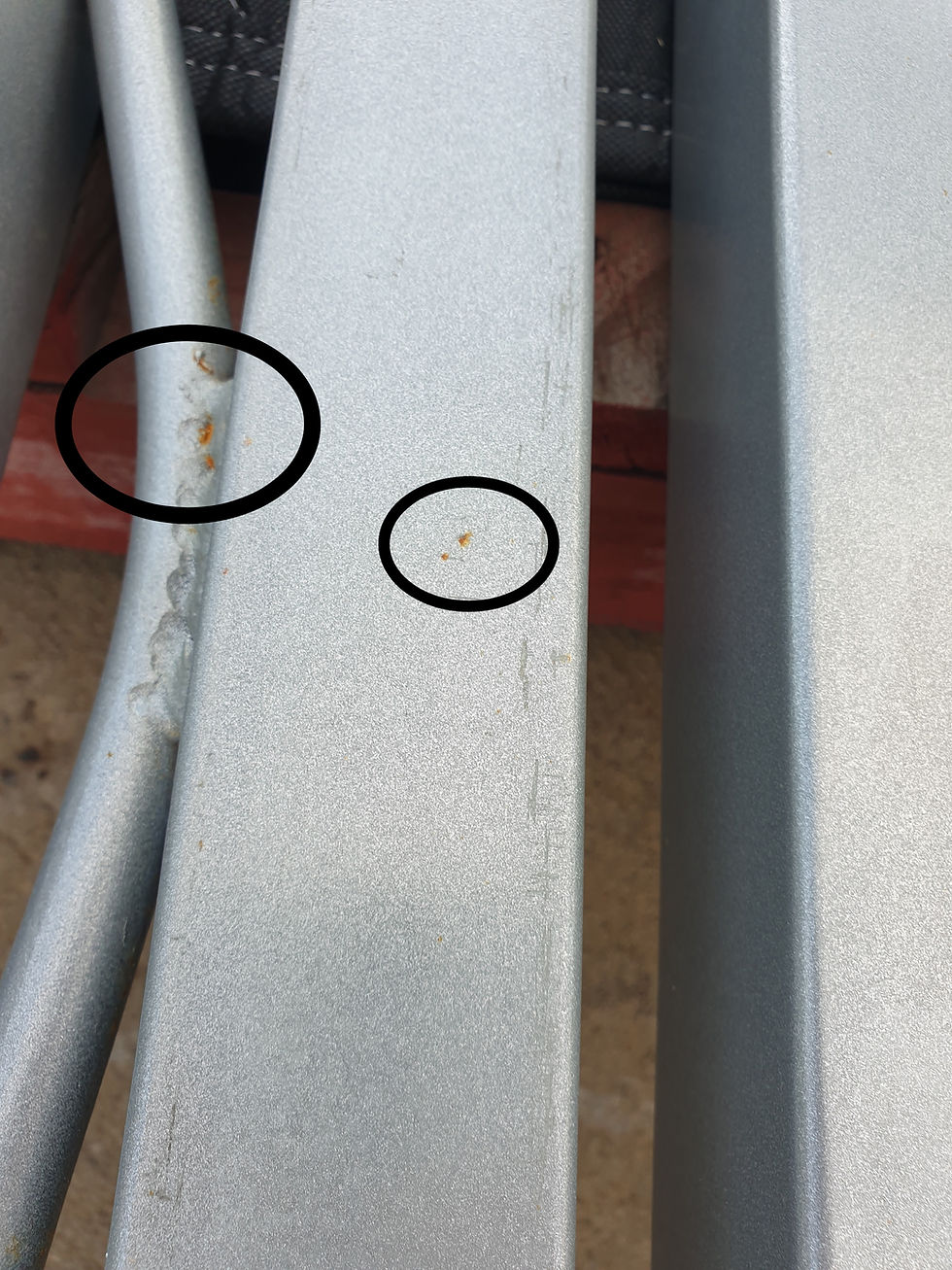
Next is the oxidisation that occurs from bare metal, where the coating has a small imperfection and isn't 100% sealed from moisture. This is a little worse looking, but still poses next to no issue if managed. Yes it is the actual metal of your equipment that has started to corrode, but in extremely small amounts and would take many years to have any affect. In the case of an aerial rig, it would exceed the life span. It happens in groves, tight spaces and extreme angles, like on top of the join for a rope cleat.


I have included a picture of the top of a head, which shows some of this type of oxidisation. It does look a little nasty, but if it is cleaned off you would see next to no penetration into the metal.
Lastly is the flaky, thick and heavy real ugly stuff. This has penetrated the top layer of metal and eating it's way through. This is where intervention is not as important as replacement! At this point the metal has reduced in thickness and no longer offers the same integrity.

So, how fast does rust work??? Probably slower than you think. There are so many factors that affect the growth rate, temperature, humidity, salination, material quality and type, but I'm going to give some rough averages and a simplified explanation.
Structural steel, in open air, around 30 degrees and 70% humidity, has an average wear of 50 microns per year. For perspective, a human hair is 70 microns. Putting in simple terms, about 1/2 a millimetre every 10 years.
A rig leg has a minimum requirement of 1.6mm thickness. Our rig legs are 2mm, so once the rig leg starts to rust, you have about 10 years before it's down to the minimum. That's from when rust starts to take effect and assuming it's on a flat 2mm thick surface. And assuming you haven't cleaned it, or taken any action at all.
On top of that, we use galvanised steel, so you can about double that time frame. Only around the welds and joins is the galvanising removed, but they are generally a lot thicker and compensated for. Also add on powder coating, which in some cases I have seen last 15 years easily.
In simple terms, your rig won't rust. It may show rust like the pictures I have attached, but by no means has it become unsafe.
How to clean? My all time fav is Magma, by Autoglym. I use this on my vehicles and powder coated surfaces all the time. Wet the area, spray, wait 5 minutes, squirt off. Or for really bad rust you can use any rust converter. It doesn't remove the rust, but converts it to a black, hard wearing surface again. If you have an area prone to rust, just give it a clean every couple years, it's not hard and will give you peace of mind not seeing the ugly brown stuff!

I hope you enjoyed my explanation, if there is anything you'd like to know about, just let me know :)


Comments